Something Borrowed, Something Reimagined: Giving Family Heirlooms a 2026 Bridal Edit
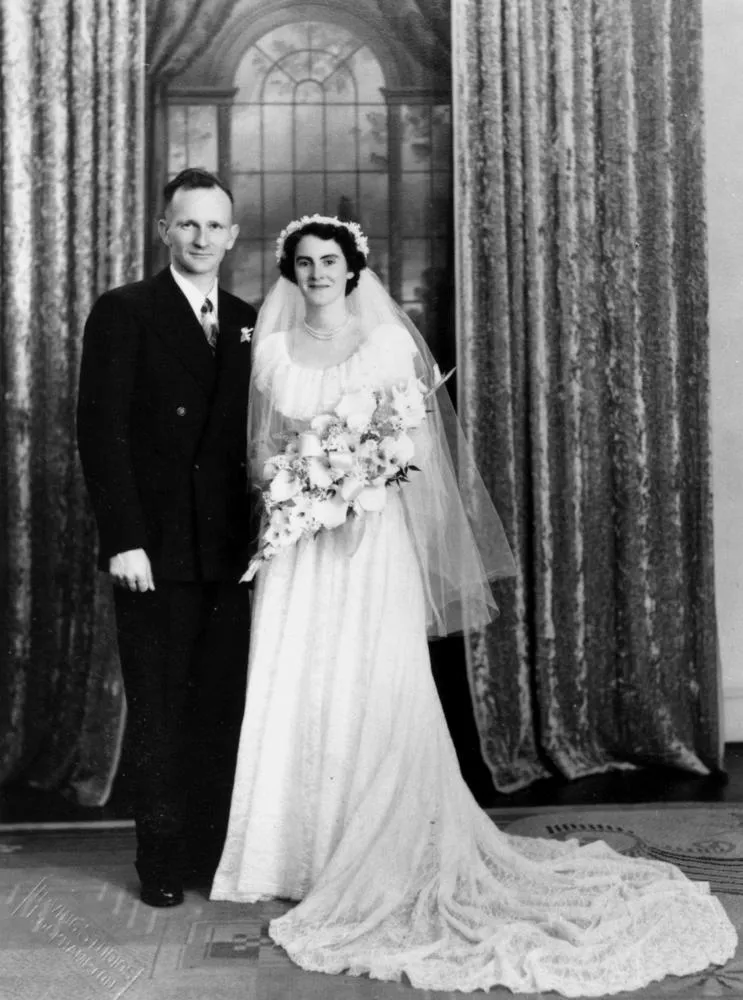
Photo: State Library of Queensland, Australia, No restrictions, via Wikimedia Commons
There is a particular kind of pressure that comes with a box of family wedding photographs. Inside, someone’s lace veil is folded in tissue; a grandmother’s brooch is pinned to a card; a length of handmade lace waits for a use nobody has quite decided on. The instinct is to wear all of it at once, as a tribute. The result can be beautiful — but it can also feel like a costume. The smarter approach for 2026 is to restyle, not simply reinstate.
For modern UK brides, heirlooms work best when they are edited. Think of the family piece as the seasoning, not the whole meal. A clean column dress, a bias-cut slip, a square-neck satin or a sharply tailored suit gives borrowed lace, veils and jewellery room to breathe. The point is not to recreate your mother’s wedding day. It is to carry her story into yours, with a silhouette that feels like the present.
Start With the Story, Not the Shoehorn
Before you take anything to a seamstress, decide what the piece actually means to you. Is it the lace itself, the person who wore it, or the ritual of wearing something borrowed? Those are different briefs. A veil can be meaningful even if it is only worn for the walk down the aisle; a brooch can do more for a look when it is pinned to a ribbon on your bouquet than when it is forced onto a neckline. Choose one hero heirloom and let the rest of the outfit support it.
This is especially true if several relatives have offered pieces. You do not need to wear every generation at once. A single piece, properly integrated, will read as intentional. A pile of them can read as an exhibition. Be kind but firm: the 2026 bridal wardrobe is about clarity, texture and line, not nostalgia for its own sake.
Lace: Edit, Don’t Preserve
Family lace is often the hardest piece to modernise, because it carries the strongest period signals. The good news is that lace is also the most adaptable. A skilled bridal seamstress can harvest motifs from a damaged veil or dress and apply them to a new neckline, cuff, hem or back panel. You are not obliged to wear the original garment. You are allowed to use the lace as material.
If the lace is strong enough, consider a detachable collar or capelet rather than full sleeves. A lace overlay on a simple slip dress can work beautifully for a city ceremony, while a few appliqué motifs at the waist give a column dress a subtle link to the past. Avoid cutting into fragile lace without advice from a textile conservator; old fibres can be surprisingly brittle, and a sample test matters more than a Pinterest mood board.
Veils: The Easiest Borrow
Veils are the most forgiving heirloom. Length is less of a commitment than it looks, and a veil that feels too much for the reception can be removed after the ceremony. A long family veil paired with a clean, modern dress is one of the most striking combinations in 2026 bridal styling: the veil supplies the drama, the dress supplies the line. If the original veil is yellowed or damaged, a seamstress can detach the lace trim and reapply it to fresh tulle.
For civil ceremonies and smaller weddings, a shorter veil or a lace-edged blusher can feel more natural. If you are wearing a suit, try a veil pinned low at the back of the head rather than a traditional crown. It is a small styling shift that makes an old piece feel deliberately current.
Jewellery: Scale and Metal Mixing
Family jewellery is where restraint pays off. A grandmother’s brooch can become a bouquet charm, a hairpin, a bag clasp or a wrist corsage on a ribbon. Pearl earrings can be worn alone with a bare neckline; a single strand can be wrapped twice and fastened at the back. The 2026 approach is to mix metals if they suit you, but keep the scale deliberate. One meaningful piece usually beats three.
Check clasps, restring pearls if needed and insure anything irreplaceable. If a piece is too fragile to wear, have it photographed in the bouquet or display it at the reception. Sentiment does not have to mean risk.
Real-Bride Restyles We’ve Seen
A Manchester bride recently wore her grandmother’s lace as a detachable capelet over a plain ivory slip dress, with the original sleeves removed and the motifs rewired into the cape’s hem. A Bristol bride used her mother’s cathedral veil for the church, then changed into a tailored ivory suit for the reception, with the veil folded and carried over her arm for photographs. In Leeds, one bride had her grandfather’s signet ring stitched discreetly inside her dress pocket rather than worn on her hand.
None of these looks tried to pretend the heirloom was new. They simply gave it a new job.
The Practical Alteration Checklist
Before any scissors come out, get permission from the owner, check the piece’s condition and book a seamstress who has worked with vintage textiles. Allow more time than you think: heirloom alterations can take weeks, and fragile fabric may need cleaning or lining first. Budget for conservation as well as alteration. And keep a photograph of the original piece, so you know exactly what changed.
The best heirloom restyle is not the one that looks most like the past. It is the one that lets you walk into your 2026 wedding feeling like yourself, with a quiet piece of family history travelling alongside you.