A Dress for the Room: Styling Your Bridal Look to the Venue, Not Just the Vision Board
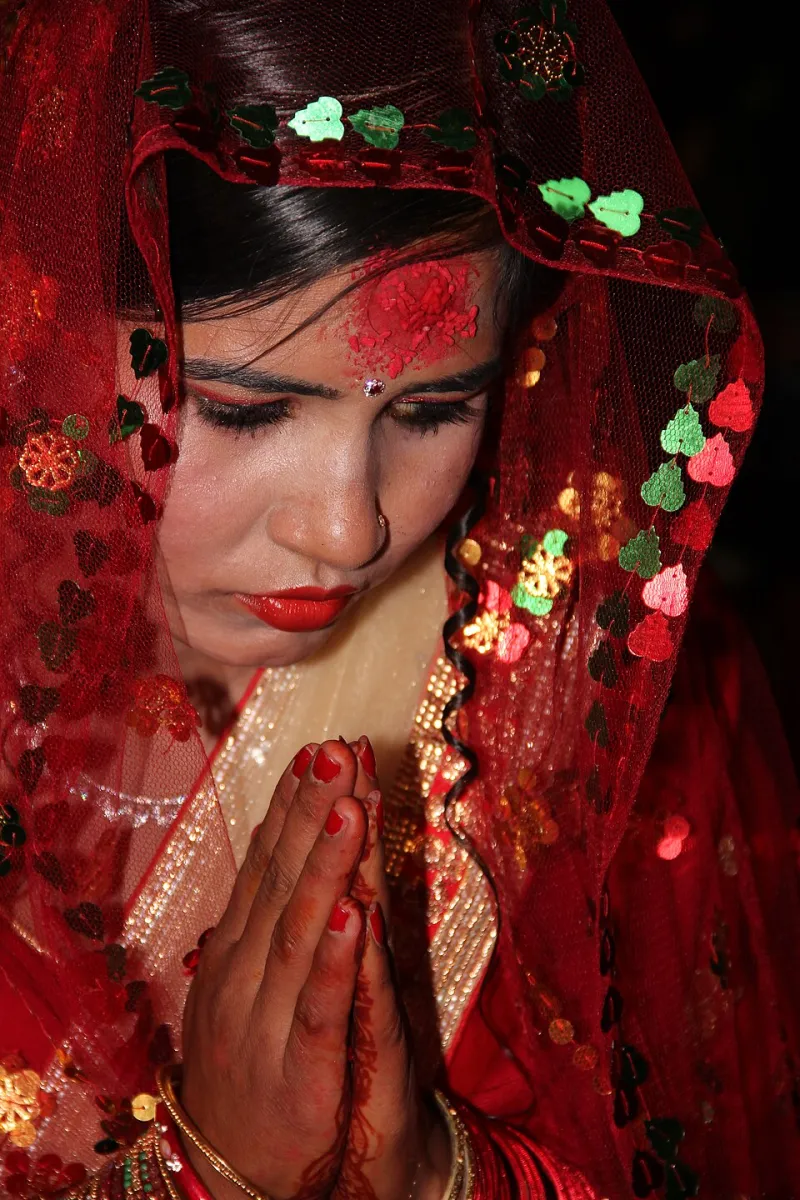
Photo: Nirmal Dulal, CC BY-SA 4.0, via Wikimedia Commons
Your venue is not a backdrop. It is a set of physical conditions: floors, light, weather, acoustics and the distance between the car and the ceremony. The dress that looks perfect on a Pinterest board can be the wrong dress for a cobbled courtyard in November. So before you fall for a silhouette, fall for the room.
Start with the room, then the dress
Ask three questions about your venue. What will I be standing on? What will the light be doing? What will the weather do to my hem, my hair and my guests? The answers narrow the field faster than any style quiz. A heavy satin ballgown is glorious in a country house and miserable in a coastal marquee with a gravel path. A slim crepe dress is chic in a town hall and freezing in a winter barn.
Town halls and registry offices
Urban town halls reward clean lines and confidence. Think column dresses, bias-cut silk, a sharp suit or a little dress with a proper coat. The rooms are often small, the light is often overhead and the floors are often polished stone or lino. Avoid trains that need a corridor and veils that need a breeze. A bride in Camden told us she chose a knee-length dress with a boxy jacket because the register office had a steep staircase and no waiting room. She was right. She could walk, sit and hug people without a handler.
Accessories should do the heavy lifting: a bold earring, a structured bag, a pair of gloves, a hat. If you are going on to a restaurant lunch, choose a dress that can take a spill and a jacket that can be removed. And check the photography rules before you plan a confetti moment.
Coastal marquees
Coastal weddings are beautiful and windy. A marquee on a Cornish cliff can give you soft light and a hairstyle that leaves the building. Choose fabrics with a bit of weight: crepe, mikado, taffeta, a lined silk. Avoid unlined chiffon and anything that needs a perfectly still hem. A train is fine if it is short and you have a plan for the grass. Shoes should be block heels or flats; stilettos and grass are not friends.
A bride in Pembrokeshire wore a midi dress with a detachable overskirt for the ceremony and took it off for the meal. She said the overskirt gave her the drama for photographs and the midi gave her the freedom to walk to the beach. That is the kind of venue thinking we love. Bring a wrap, a spare pair of shoes and a hair pin. Ask your photographer about wind direction and sunset time.
Country houses and stately homes
Stately homes can take grandeur. Long sleeves, lace, full skirts, cathedral veils and family jewellery all make sense against panelled walls and big windows. But grandeur has practical limits. Check the stairs, the gravel, the distance from the bridal suite to the ceremony, and whether the house allows confetti or candles. A bride in Northumberland chose a taffeta ballgown with a detachable train because the ceremony was in a chapel and the reception was in a tent on the lawn. The detachable train was the hero: dramatic in the chapel, gone for the lawn.
If the house has dark wood and low light, avoid fabrics that go flat in shadow. Lace and beading catch light; plain navy or charcoal can disappear. Ask to see the room at the time of day you will be married. If you are having a winter wedding, check the heating and the cloakroom.
Winter barns
Barns are atmospheric and cold. They are also full of texture: stone, wood, hay, fairy lights and perhaps a draughty door. A delicate slip dress can look underdressed and feel freezing. Choose a dress with sleeves, a lined bodice or a substantial skirt. Add a cover-up that you actually like: a wool coat, a faux-fur stole, a cape, a knit cardigan. A bride in Yorkshire wore a long-sleeved crepe dress with a velvet cape and said it was the best decision she made. She was warm, she could move, and the cape photographed like a dream.
Check the floor. Barn floors can be uneven, dusty or cold. Block heels, boots or a thick sole will save you. If the barn has a gravel yard, practise walking in your shoes before the day. And if the venue is lit by fairy lights, test your dress in that light; some fabrics turn grey, others glow.
The venue test checklist
Before you commit to a dress, do a venue test. Take a photo of the dress in daylight, in indoor light and with flash. Walk in it on carpet, stone, grass and gravel if you can. Sit down, climb stairs, hug someone, raise your arms. Check the hem length against the venue's steps. Ask your photographer how the dress reads in low light. Check the weather forecast for the season and plan a cover-up. And ask the venue about confetti, candles, heel-protectors and accessibility.
The right dress is not the one that looks best on a hanger. It is the one that works in the room, on the day, with the person wearing it. At Z Bridal Studio, we would rather you choose a dress that lets you enjoy the venue than one that makes you stand still all day.