The Layered Vow: One Bridal Wardrobe for a Civil Ceremony and a Second Rite

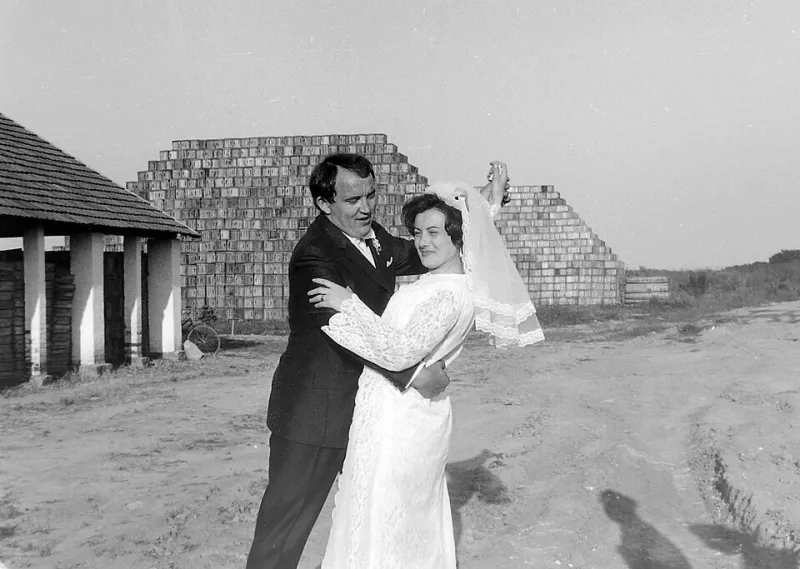
Photo: Archive.org, Public domain, via Wikimedia Commons
Two ceremonies can mean two very different rooms: a council chamber with strip lighting and a guest list of twelve, then a community hall or place of worship where the dress code, the acoustics and the expectations shift entirely. The good news? You do not need two gowns to feel like yourself in both. You need a wardrobe with a clear spine — and a few well-planned hinges.
Start with the bones of the look
Before you fall for a detachable train or a sparkly cape, decide what the core dress needs to do. For a civil ceremony, that usually means clean lines, a comfortable fit for signing the register and enough structure to survive a morning of standing, hugging and photos outside a town hall in unpredictable UK weather. For the second rite, it may mean more coverage, a different neckline, a colour cue or simply more room to move during prayers, blessings or family photographs.
Think of the first dress as the base layer. A simple slip or A-line in ivory, sage or soft blue can be the constant. Then use overlays to change the mood: a detachable overskirt for the register office, removed for the reception or rite; sheer sleeves that button on; a modest panel that pins in discreetly; a lining that zips into a sheer bodice. The trick is to agree these pieces with your seamstress at the first fitting, not three weeks before.
The cover-up is the hinge
Cover-ups are where two-ceremony wardrobes earn their keep. A tailored jacket in the same fabric as the dress reads polished for a civil ceremony and respectful for a faith setting. A long cape or a fine knit shawl can be slipped off for lunch and back on for the evening. If your second ceremony calls for a head covering, look for a veil, scarf or dupatta that works with the dress neckline rather than fighting it. The best cover-ups look intentional in both rooms, not like something you grabbed at the last minute.
Jewellery, shoes and scent: the small swaps
You do not need a whole new jewellery box. Choose one piece that stays — a pair of gold hoops, a family ring, a simple chain — and let the rest change. Swap a delicate pendant for a bolder collar for the second ceremony. Change earrings rather than necklaces if your dress has a high neckline. Shoes can stay the same if they are broken in and comfortable; if the second venue means gravel, stairs or a lot of standing, pack a second pair you have actually walked in. Scent is a quiet styling tool: one fragrance for the civil ceremony, a softer or more familiar one for the rite, so each room has its own memory.
What to agree with your seamstress before alterations
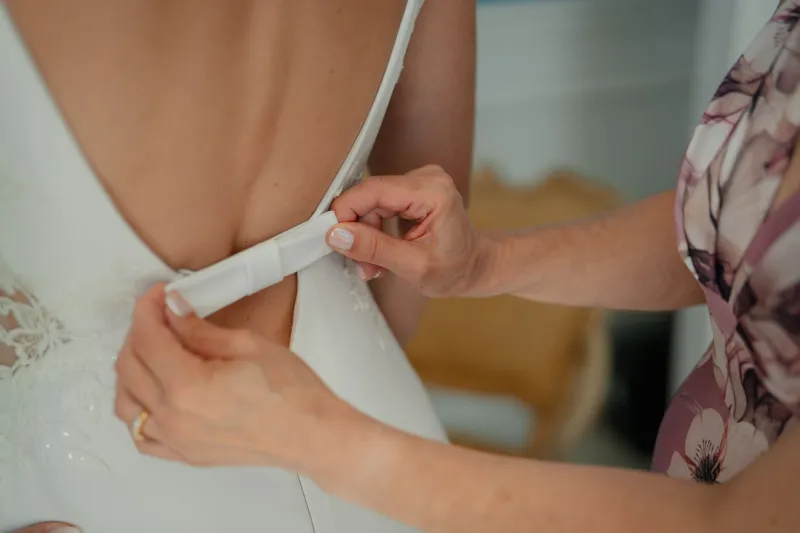
This is the practical bit that saves the day. Ask for detachable elements to be tested while you are wearing the exact underwear and shoes you plan to use. Confirm how each piece attaches — hidden poppers, hooks, ribbons, magnets — and ask for a demonstration you can film on your phone. Agree seam allowances so the dress can be let out or taken in if fittings shift. Ask whether the bodice can take the weight of a cape or overskirt without pulling. Check that any modesty panel lies flat when you move, sit and raise your arms. And book a final fitting that includes the cover-up, the jewellery and the second pair of shoes, not just the gown.
Timing between venues
Build in more time than you think. A civil ceremony at 11am and a rite at 3pm sounds generous until you factor in photos, lunch, traffic and a change of room. Pack a small between-rooms kit: blotting papers, a steamer or travel iron if the venue allows, spare tights, safety pins, fashion tape, a lint roller, plasters and a needle and thread. If you are travelling by taxi or train, choose a cover-up that does not crease like a crisp packet. Ask a friend to hold your jewellery swaps in a labelled pouch so nothing goes missing between ceremonies.
A real-bride perspective
One bride I spoke to in Birmingham wore a simple column dress for her register office ceremony, then added a borrowed embroidered shawl and her mother's earrings for the church blessing. She said the best decision was keeping the same shoes — 'I had already done 6,000 steps in them' — and the worst was leaving the shawl in the taxi. Her advice: treat the second look as a layer, not a second personality. If the dress feels like you in the first room, it should still feel like you in the second.
The between-rooms checklist
- Choose the core dress for comfort and movement first.
- Plan detachable pieces with your seamstress at fitting one.
- Test every attachment while sitting, standing and hugging.
- Match cover-ups to both rooms, not just the photos.
- Keep one jewellery piece constant and swap one or two.
- Break in both pairs of shoes before the day.
- Pack a labelled between-rooms kit.
- Confirm timings, transport and a quiet space to adjust.
- Give a friend the job of holding jewellery and spares.
- Do a final full-look rehearsal, including the second venue shoes.
Two ceremonies do not have to mean two competing bridal looks. With a clear base, a clever cover-up and a seamstress who knows the plan, one wardrobe can move from the register office to the rite without missing a beat — and still feel unmistakably yours.