The Other Number on the Tag: A 2026 Guide to Bridal Alteration Costs
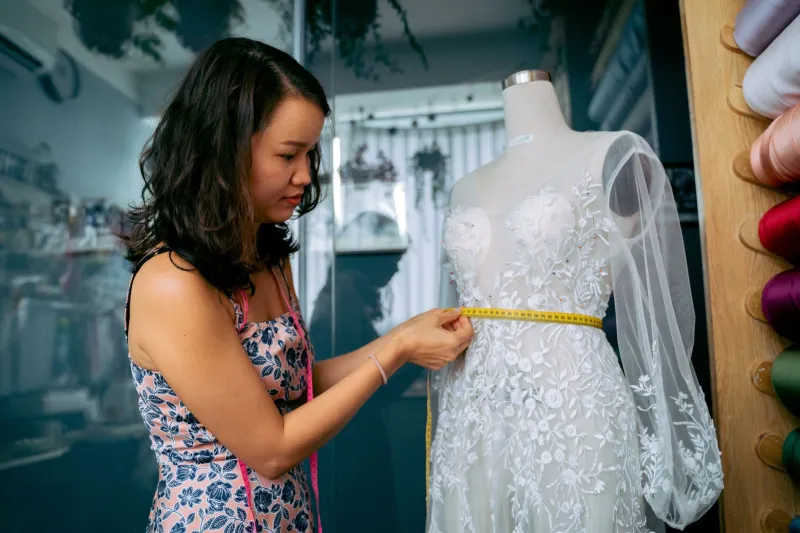
There is a moment in nearly every bridal appointment when the conversation turns from the dress to the work behind the dress. The hem, the straps, the bustle, the bit at the bust that does not quite sit. It is not a red flag. It is just the reality of wedding dresses. In 2026, most gowns need some level of alteration before they feel like yours, and the cost of that work deserves a line in the budget long before the deposit goes down.
Why alterations are almost always part of the plan
Wedding dresses are not made to fit one person perfectly off the rail. Sample sizes are chosen for the shop floor, made-to-order dresses still arrive with room for fitting, and second-hand or off-the-peg finds often need more work because they were shaped for someone else. Even a dress that feels close in the boutique will usually need the bodice refined, the length checked in your actual shoes, and a bustle added so the train survives the dance floor.
This is not a reason to panic. It is a reason to treat alterations as part of the dress budget rather than an unpleasant surprise in the final weeks.
The straightforward jobs and what they tend to cost
Simple alterations are the everyday seamstress work: taking in a waist, shortening a strap, adding cups, lifting a hem. Prices vary across the UK, with London and big-city boutiques usually at the higher end, but these are realistic 2026 ranges to hold in your head.
- Hemming a simple dress: £80 to £250. Layered tulle, lace edging, horsehair trim and beading push this upwards.
- Taking in or letting out a waist: £60 to £180, depending on structure and how many seams are involved.
- Shortening or adjusting straps: £30 to £80.
- Adding a bustle: £80 to £250. A French bustle or a multi-point bustle takes more time than a single hook.
- Sewing in cups: £25 to £70.
- Minor neckline or shoulder tweaks: £40 to £120.
These are not wild numbers, but they add up. A hem, a waist, straps and a bustle can easily land between £250 and £600 before you have touched anything structural.
Where costs climb: structural work
Structural alterations are the ones that change how the dress is built, not just how it sits. This is where a quote can move from helpful to hair-raising, and where it pays to ask questions before you commit.
- Rebuilding a bodice: £250 to £700 or more, especially with boning, corsetry or delicate lace.
- Resizing by more than one dress size: £200 to £600, and sometimes not advisable at all.
- Reworking a neckline with lace or beading: £150 to £500.
- Adding sleeves or significant coverage: £150 to £400.
- Shortening a heavily beaded or embroidered skirt: £200 to £500.
- Converting a back to a corset: £150 to £350.
A useful rule: if the change touches seams, boning, lace motifs, beading or the dress structure, expect the price to reflect the skill. A seamstress is not being dramatic when she says a dress needs to be taken apart. She is telling you that the work is closer to dressmaking than a quick fix.
The timing tax is real
Alterations have a season, just like weddings. Late spring and summer are busy, and a seamstress who is juggling six brides in the same week may charge a rush fee for a dress that arrives late. Start the conversation eight to twelve weeks before the wedding for straightforward work, and four to six months ahead if the dress needs structural changes or you are buying a sample that has been tried on by half the county.
Last-minute tweaks are sometimes unavoidable, but they are rarely cheap. A small emergency adjustment might be £30 to £100, and a panicked week-of request can be more. Ask for the quote in writing, including whether pressing or cleaning is included.
A calm budgeting framework
Before you say yes to the dress, set aside an alterations pot. A common starting point is 10 to 20 per cent of the dress price, but that is a rough guide rather than a rule. A simple crepe gown might need £250 of work; a lace sample with a train and a corset back could run to £800 or more.
Try this five-step approach:
- Ask the boutique what alterations they would expect for this specific dress on you. Get a range, not a promise.
- Price the work separately with an independent seamstress if the boutique only quotes in-house. You are allowed to compare.
- Add a buffer of £100 to £200 for the changes you cannot predict until the first fitting.
- Budget for pressing or cleaning, often £80 to £200, especially if the dress has been tried on or stored.
- Keep the essential work separate from the nice-to-have work. A secure bodice, a safe hem and a working bustle come before decorative extras.
Questions to ask before you commit
Can this dress be altered by two sizes without losing its shape? Is there enough seam allowance? Will the lace pattern still match if the bodice is taken in? Who does the alterations, and what is their turnaround time? What happens if my weight changes between now and the final fitting? Can I have the quote in writing?
If the answer to any of these is vague, slow down. A good bridal boutique or seamstress will not mind the questions. They would rather discuss the work now than rescue a dress in the final fortnight.
When to walk away
Sometimes the kindest budgeting decision is no. If the dress is several sizes too small with no seam allowance, if the lace is so fragile that altering it risks damage, or if the quote for structural work is more than the dress itself, it is fair to reconsider. There are other dresses. There is only one wedding morning, and you want to be able to bend, breathe and sit down in it.
Alterations are not an admin extra. They are the final stage of finding the dress. Put a number in the budget early, ask for clear quotes, and give yourself room to breathe when the seamstress starts pinning.