Where Would You Even Put Your Phone? A 2026 Guide to Bridal Pockets

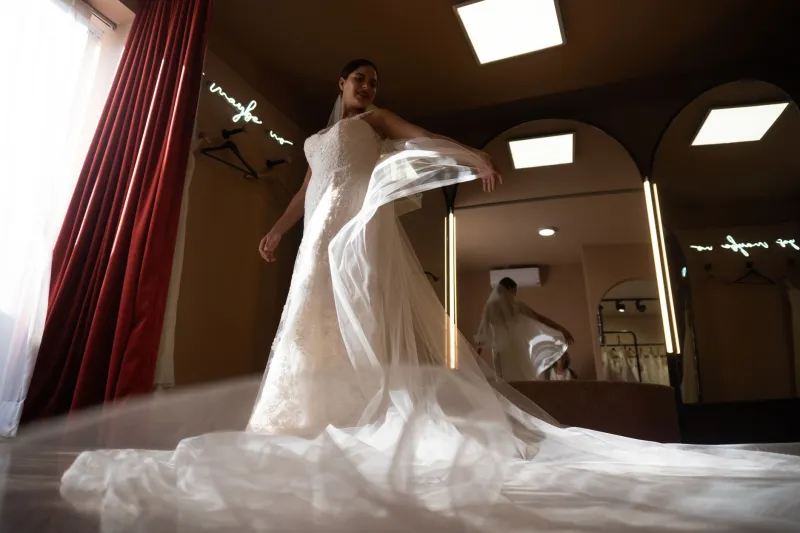
Photo: bride with hands in pockets of wedding dress smiling, via imgcdn.stablediffusionweb.com
The quiet luxury of not holding anything
Every bride has the same tiny problem on the morning of the wedding: where does the phone go? Or the lipstick, the tissues, the folded note from your mum? You can hand them to a bridesmaid, but then you spend the day tracking her down. You can carry a clutch, but then you spend the day putting it down and picking it up. Pockets solve a problem that no one talks about until they are standing in a fitting room with a phone in one hand and a pin in the other.
In 2026, pockets are not a gimmick. They are a styling decision with real consequences for the line of the dress, the way you move, and how you feel by the time the dancing starts. The trick is knowing which pockets work, where they should sit, and when to leave well alone.
Two kinds of pocket, two very different lines
Broadly speaking, bridal pockets come in two flavours. The first is the hidden inseam pocket, sewn into the side seam of the skirt or bodice. From the outside, you would never know it is there. The second is the patch pocket, which is exactly what it sounds like: a visible pocket stitched onto the surface of the dress. Patch pockets can be sweet and casual on a short dress or a simple crepe gown, but they draw the eye. On a heavily embellished ballgown, they can look like an afterthought.
There is also the faux pocket—a flap or a seam that suggests a pocket without actually holding anything. These are purely decorative. If you want to carry a phone, check that the pocket is real before you fall in love with it.
Placement is the whole argument
A pocket is never just a pocket. Where it sits changes how the dress reads. A side-seam pocket at hip level can add bulk if the bag inside is bulky or the fabric is thin. A slanted front pocket on a fit-and-flare can look sporty and modern; the same pocket on a bias-cut silk slip dress can pull the fabric out of line. On an A-line or ballgown, pockets set into the side seams of the skirt are usually the safest bet because the volume of the skirt hides the pocket bag. On a sheath or column dress, you need a very flat pocket and a seamstress who knows what they are doing.
Fabric matters as much as placement. Crisp mikado and structured crepe hide pockets well. Delicate lace, heavy beading, and bias-cut satin are less forgiving. If the dress is unlined, a pocket bag will show through. If the skirt is very fitted, a phone will print. None of this means you cannot have pockets; it means you need to test them properly.
The fitting-room test
Do not judge a pocket by looking at it. Put something in it. A phone is the obvious test because it is the heaviest thing most brides carry. Add a lipstick and a small packet of tissues. Then walk across the room, sit down, stand up, and turn in front of the mirror. Watch the hemline. Does the pocket bag swing out? Does the side seam pull? Does the dress hang differently on one side?
If you are trying on a sample with pockets, ask to see the dress with your underwear and shoes, not just as it comes off the rail. A pocket that looks fine with a stiff sample crinoline may behave differently once the dress is altered to your measurements. And if you are planning to add pockets later, test the dress without them first so you know what the original line looks like.
What actually goes in there
A bridal pocket is not a handbag. It is a small, elegant compromise. Think phone, lipstick, tissues, a compact mirror, a folded note, or a few pound coins for a post-ceremony ice cream. Do not put your keys, your wallet, or a full makeup bag in there. The weight will drag the seam, and the bulge will show. If you need more than that, a small clutch or a trusted bridesmaid is still the better answer.
Asking for pockets without wrecking the dress
If you are buying new, ask the designer or boutique whether the pattern allows for pockets. Some dresses are designed with them from the start; others can be adapted. If you are working with a seamstress on alterations, bring a photo of the pocket style you like and ask about seam allowance, lining, and fabric weight. A good seamstress will tell you honestly whether the dress can take a pocket without losing its shape. They will also quote you for the work, which can range from a simple seam pocket to a more involved patch pocket with a flap.
In the UK, independent seamstresses are often the best people to ask because they see the inside of the dress as well as the outside. Book a consultation early—pocket alterations are usually straightforward, but they are not instant, and you do not want to be discussing seam allowances the week before the wedding.
The verdict
Pockets are not essential, but they are a smart styling choice for the bride who wants to carry less and feel more at ease. If the dress can take them, if the placement suits the silhouette, and if you will actually use them, they are worth asking about. If the fabric is delicate, the cut is bias, or the pocket would distort the line, let it go. A beautiful dress with no pockets is still a beautiful dress. A beautiful dress with a badly placed pocket is a compromise no one needs.